From Oz to Wicked Part Two: Wicked on Stage and Screen
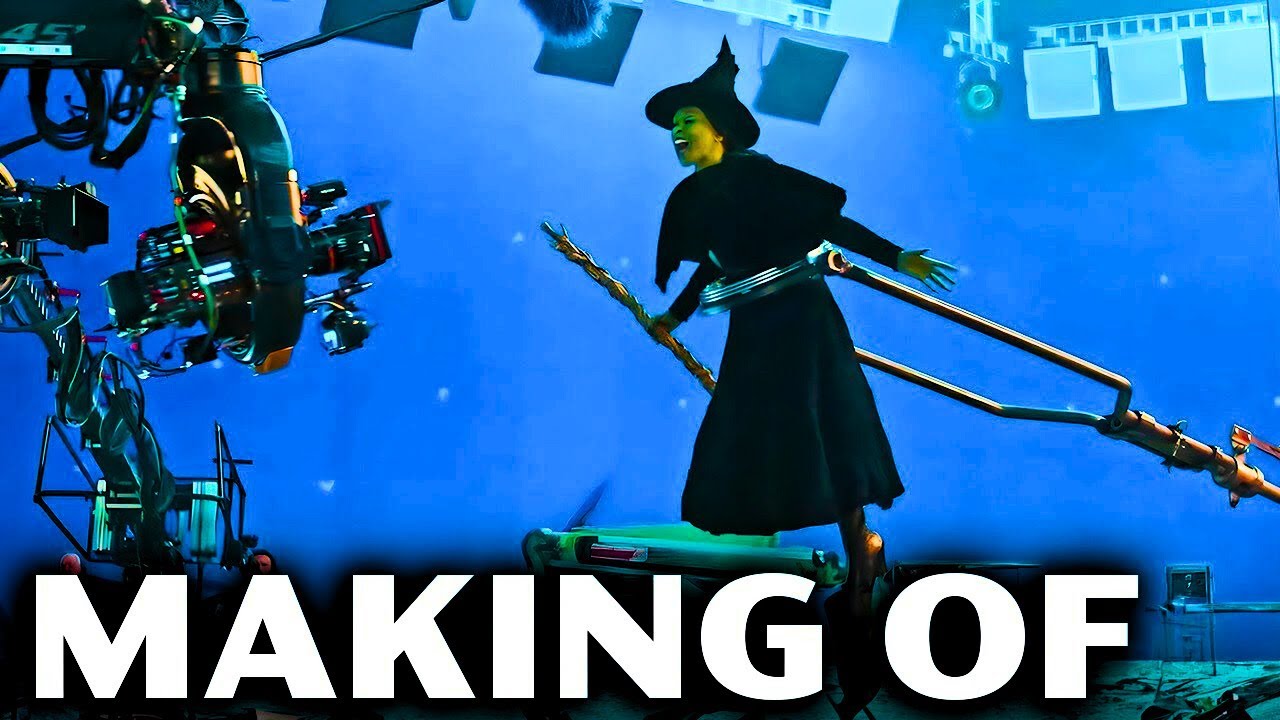
Behind-the-scenes on Wicked
Wicked: History and Creative Team
The musical Wicked: The Untold Story of the Witches of Oz emerged as one of the most inventive reimaginings of the Oz mythos. With music and lyrics by Stephen Schwartz and a book by Winnie Holzman, the show traces its origins to Schwartz’s vacation discovery of Gregory Maguire’s 1995 novel. Recognising its dramatic potential, Schwartz spent years cultivating the idea as a film before convincing Universal Pictures producer Marc Platt in 1998 to make it a stage musical.
The development process for Wicked was meticulous. Schwartz, Holzman and Platt spent an entire year outlining the show scene by scene before any script or music was drafted. Schwartz even created an initial outline using Roman numerals to discuss plot progression with future collaborators. To maintain balance between story and song, the team employed a storyboard system: white cards marked story beats, while blue cards indicated musical numbers. This method allowed them to ensure that songs arose organically from character and plot rather than interrupting the narrative.
Directed by Joe Mantello and choreographed by Wayne Cilento, the original Broadway cast starred Idina Menzel as Elphaba and Kristin Chenoweth as Galinda (later Glinda), with Joel Grey portraying the Wizard. The scenic design, by Eugene Lee, was inspired by W. W. Denslow’s illustrations of Baum’s original books and conceptualised through a giant clock motif, while costume designer Susan Hilferty created a distinctive “twisted Edwardian” aesthetic.
Connections to The Wizard of Oz
Wicked is a prequel to Dorothy’s adventures in Oz, chronicling the unlikely friendship between Galinda/Glinda and Elphaba, the Wicked Witch of the West. Act I introduces character dynamics and thematic elements, setting up the domino effect of events in Act II that explain many familiar sequences from the 1939 MGM film. While inspired by Gregory Maguire’s novel—the musical treats the 1939 movie as a documentary of Ozian history, requiring narrative explanations for iconic cinematic moments: Glinda traveling by bubble, the Wicked Witch coveting the ruby slippers and the witch’s apparent melting.
The creative team was intent on “reverse-engineering” the Ozian universe, providing imaginative backstories for iconic elements. For example, Nessarose, Elphaba’s sister, is depicted in a wheelchair, rather than born without arms as in Maguire’s novel. Elphaba casts a spell on the shoes to enable her sister to walk, establishing the significance of the ruby slippers. In a creative homage to Baum’s original text, Nessarose wears silver slippers in the film, but strategic red spotlights create the ruby appearance iconic to the 1939 movie. Schwartz’s original outline envisioned Elphaba faking her melting death to reunite with Fiyero (the Scarecrow) in secret, ensuring her survival outside the regime. The Wizard is portrayed as Elphaba’s biological father, having seduced her mother using a green elixir upon arriving in Oz.
Legal and copyright considerations shaped aspects of both the stage and film adaptations. Universal lawyers restricted direct references to elements unique to the MGM film, such as the ruby slippers, Yellow Brick Road design and specific shade of green for the Wicked Witch, resulting in careful rewriting during San Francisco tryouts. Despite these constraints, musical homages remained. “No One Mourns the Wicked” echoes “Ding Dong! The Witch Is Dead,” while Elphaba’s second leitmotif, the “Unlimited” theme, integrates the first seven notes of “Over the Rainbow” with alterations to avoid copyright infringement. The film trailer also subtly remixes “Defying Gravity” with Herbert Stothart’s Wicked Witch/Miss Gulch motif from the 1939 film.
Film Adaptation: Wicked (2024) and Wicked: For Good (2025)
The stage musical’s led to the creation of a two-part adaptation, directed by Jon M. Chu. Cynthia Erivo stars as Elphaba and Ariana Grande as Glinda, bringing both star power and vocal prowess to the film.
The story was divided into two films—Wicked (2024) and Wicked: For Good (2025)—after the creative team determined that condensing the entire narrative into a single film would undercut its emotional and musical impact. Schwartz noted that “Defying Gravity” is written to bring a curtain down; any immediate continuation afterward risks feeling “hugely anti-climactic.” Both films feature new songs designed to enrich the story. In Wicked features two new songs: “No Place Like Home” and “The Girl in the Bubble.” In a nod to modern musical filmmaking techniques, the lead vocals were recorded live on set, following the precedent set by Les Misérables (2012), a method insisted upon by both Erivo and Grande.
Scholarly Insights and Thematic Interpretations
Wicked has been analysed as a feminist retelling of the Oz story, focusing on the transformative power of female friendship. Departing from Maguire’s darker, politically-charged novel, the musical emphasizes the bond between Glinda and Elphaba, portraying it as potentially stronger than romantic relationships and central to the narrative’s emotional core.
The show also communicates political messages. The Wizard’s regime enforces anti-Animal bigotry, mirroring real-world persecutions. Ozian society is depicted as largely apathetic, enabling systemic oppression to flourish. Elphaba’s green skin operates as a marker of otherness. Wicked has been said to incorporate queer conventions.
Maguire’s novel is described as dark, adult and political, spanning thirty-eight years of Elphaba’s life. The musical condenses the narrative to Elphaba’s university years and introduces a love triangle between Elphaba, Glinda and Fiyero.
Evolution and Adaptation
Wicked is the product of countless adjustments, trims and inspired accidents that reveal the restless ingenuity of its creators. During pre-Broadway rewrites, for instance, Stephen Schwartz cut an eight-minute scene between Elphaba and Dr. Dillamond after his mother noted it slowed down the pace. The composer’s willingness to rethink and reshape became part of the show’s DNA. Even Glinda’s voice evolved: her songs were first written for an alto until Kristin Chenoweth’s crystal soprano inspired Schwartz to rewrite whole passages.
Musical motifs carry echoes of Schwartz’s past — Elphaba’s ominous theme borrows its strcuture from his 1971 rock musical The Survival of St Joan. Language itself became part of the picture: bookwriter Winnie Holzman invented what the team dubbed “Oz Speak” — a playful dialect of words such as “confusifying” and “adjustification” — to mark Oz as a world slightly askew from our own.
Innovation and Inclusivity in Film Adaptation
Even in its film form, Wicked continues to evolve. Schwartz makes a playful cameo in the 2024 adaptation, signaling his ongoing creative presence. When suggestions were made to add hip-hop elements to “Popular,” Ariana Grande insisted the number retain its original charm. Casting Marissa Bode as Nessarose marked a milestone for representation, making the character accessible to performers with disabilities and reflecting the production’s broader commitment to inclusivity.
Watch
Before you watch: these videos are official releases and still live at time of posting.
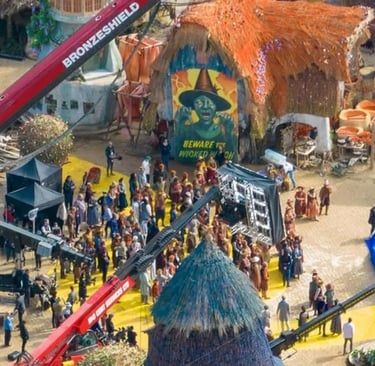
Wicked – Building the World of Oz Featurette
Director Jon M. Chu and the design team explore how the expansive sets of Oz and Shiz were constructed — nine million tulips, towering backdrops, and magical realism in physical form.
Further Reading
Defying Gravity: The Creative Career of Stephen Schwartz, from Godspell to Wicked by Carol de Giere
The essential biography tracing Schwartz’s evolution from his early musicals to the creative vision behind Wicked.
Buy it here
Women, Leadership, and Power: Revisiting the Wicked Witch of the West by Sharon D. Kruse & Sandra Spickard Prettyman
A feminist reading of Oz’s witches that reframes Elphaba as a study in gender and authority.
Read it here


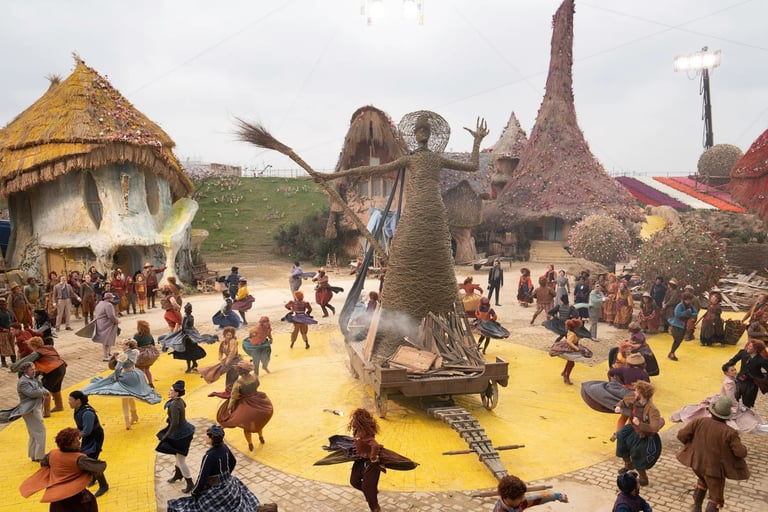
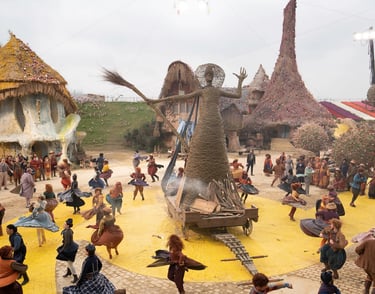
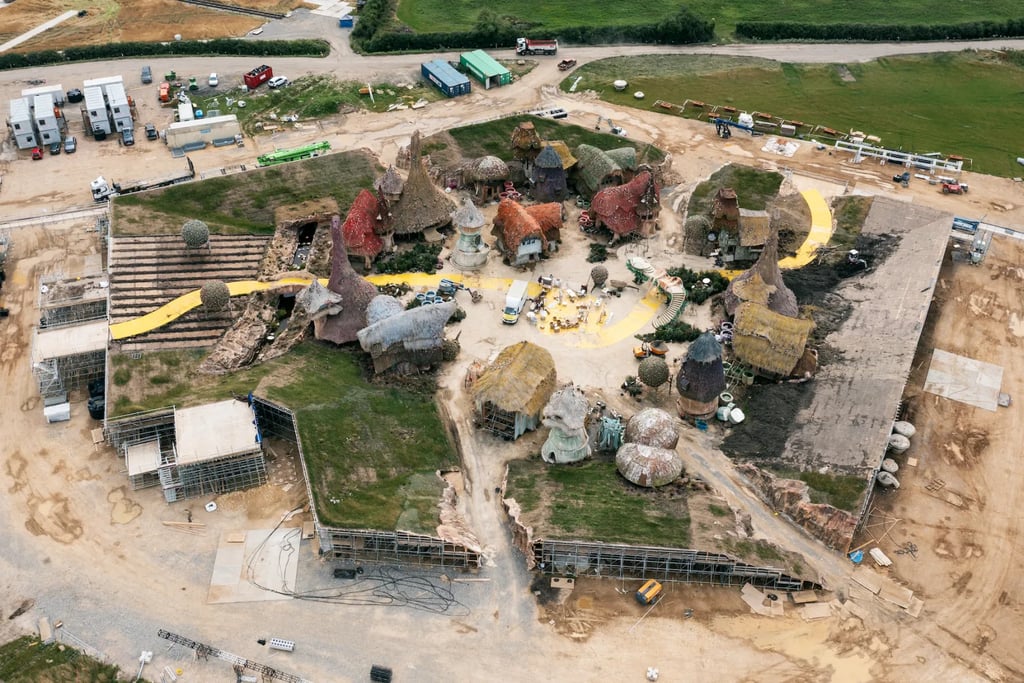
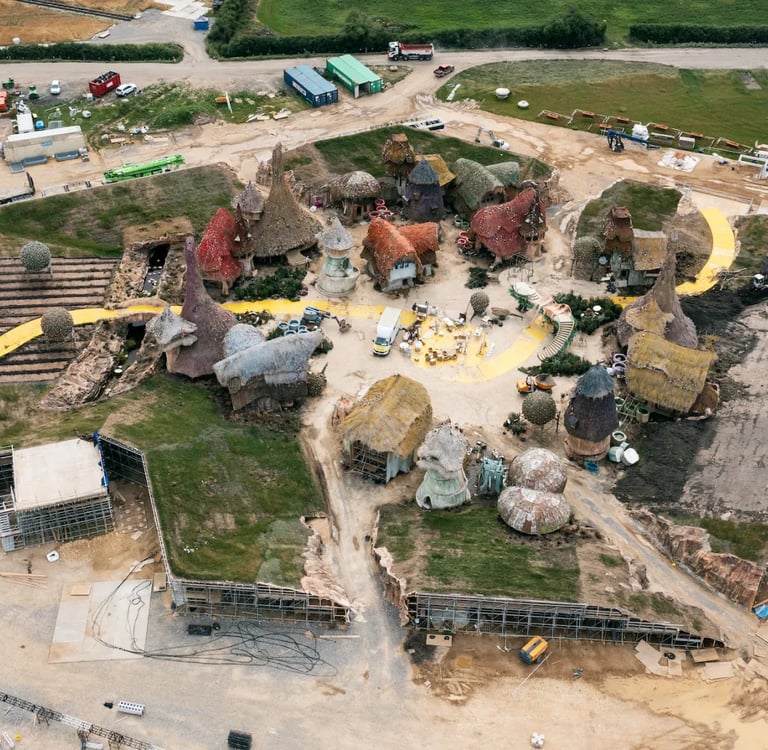
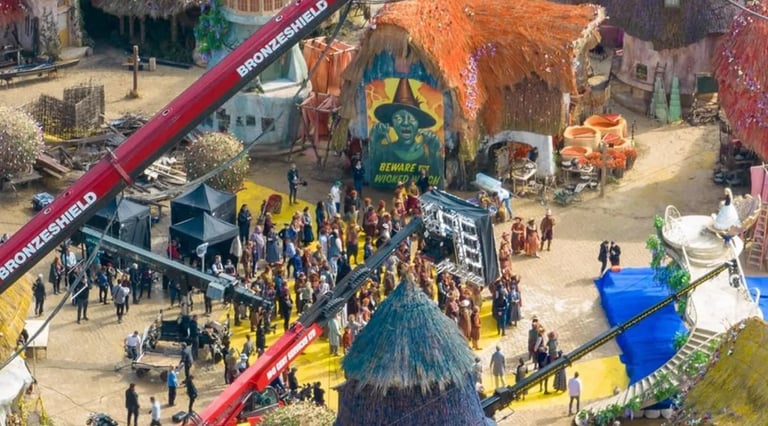
Behind the Scenes of Wicked SET DESIGN | Artrageous with Nate
A focused look at set-construction, scenic designer commentary and how the Broadway production’s visuals carry into the film world.