Christmas in the Hollywood Musical
How Tinsel, Memory and Music Built a Genre’s Favourite Pause Button
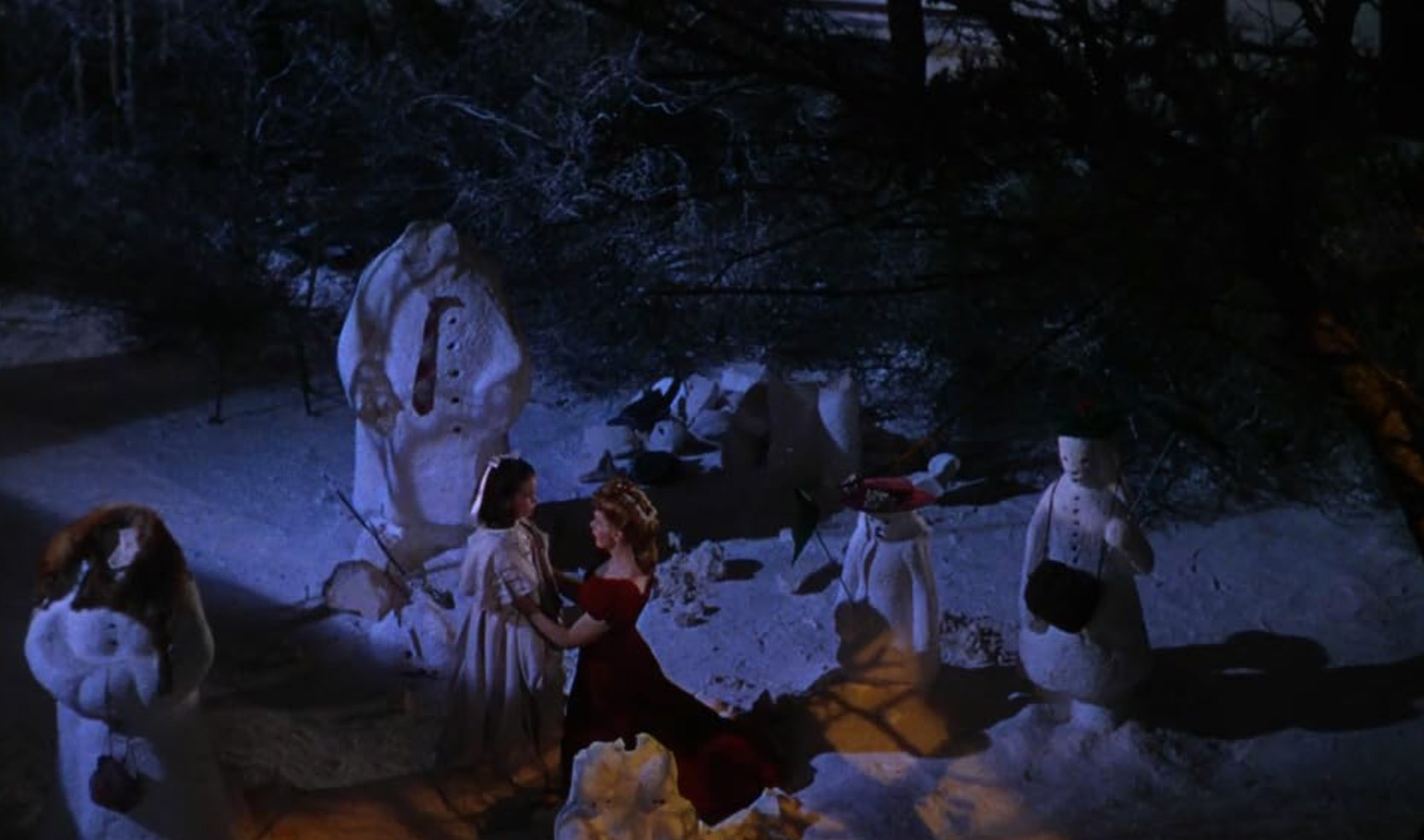
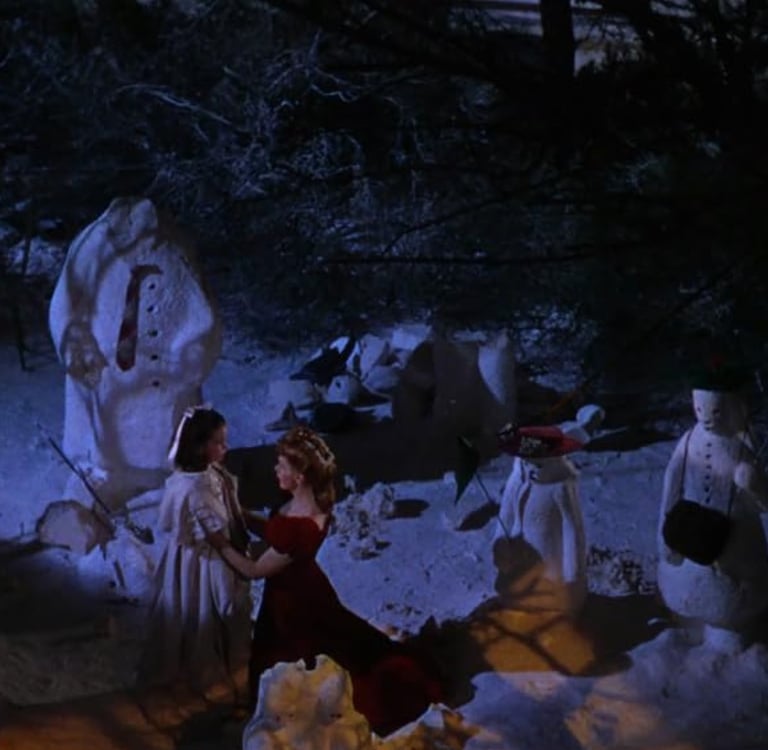
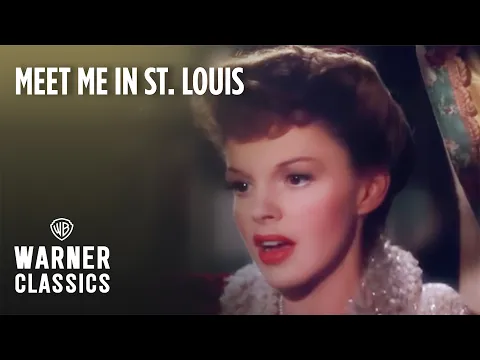
Snow falls outside the Smith family home in Meet Me in St. Louis (1944). The season is gathering itself: candles, domestic ritual. But in one of Hollywood’s most indelible Christmas moments, little Tootie Smith is outside smashing her snowmen as if destroying the past she’s about to lose. Esther—Judy Garland, somehow ingénue and icon at once—follows her, sits beside her in the drifting cold, and sings “Have Yourself a Merry Little Christmas.”
The song is an emergency truth-telling wrapped in snow. The original lyrics were bleak—“It may be your last”—yet Garland sings them with a gentleness that makes the honesty more devastating. Something is ending. Something is slipping away. Christmas, in this moment, is not decoration. It is a narrative intervention: a pause button that lets the film stop moving long enough to say the things that can’t be spoken without snow.
Hollywood musicals whirl and glide and tap their way forward. Christmas behaves differently. Christmas asks them to sit still.
Post-War Community Building: Christmas as Social Glue in the 1950s
By the 1950s, America was trying to rebuild community. The suburbs were swelling. Christmas, in musical films, became the seasonal technology holding it all together.
In On Moonlight Bay, the Christmas party is a harmonising ritual. The carols, the warm interior glow, the sense of a neighbourhood briefly breathing in unison—this is Hollywood applying a nostalgia filter. Christmas stands in for stability.
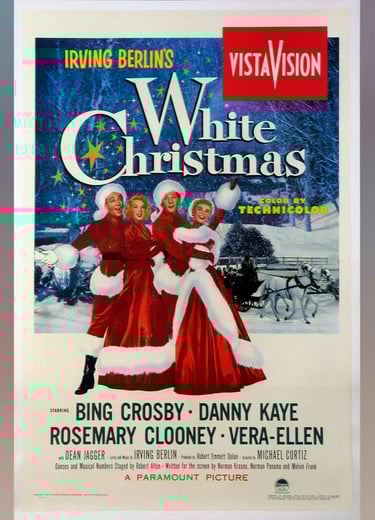
White Christmas again delivers the clearest example. The final act is a single extended unity exercise. The Christmas Eve show gathers soldiers, family and strangers into one emotional space. Old bonds reform. Snow falls on cue. Christmas here is patriotic. A fantasy of cohesion in a decade increasingly defined by its fault lines.
Wartime Stillness: The 1940s and the Architecture of Nostalgia
Musicals from the Golden Age of Hollywood gravitate toward nostalgia—it’s their default emotional lighting. And in the early 1940s, nostalgia was necessary. America was in the thick of wartime anxiety. Hollywood could not mend the world, but it could, at least for a few scenes, imagine a safer one.
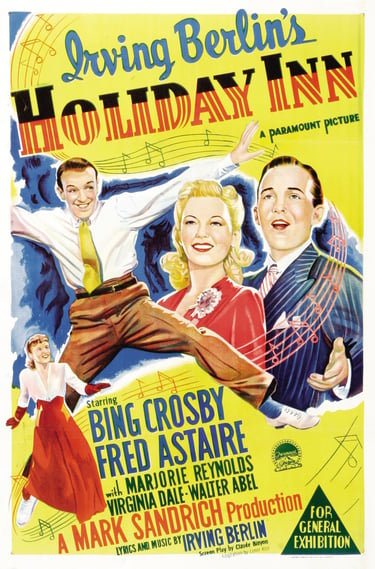
When Irving Berlin wrote “White Christmas” for Holiday Inn (1942), he intended it as one holiday number among many. But Christmas, with its instant emotional shorthand, stole the film. Bing Crosby repeated the song in White Christmas (1954), and it became a secular carol for wartime unity, a memory of togetherness already slipping as the Cold War dawned.
These films use Christmas strategically. In Meet Me in St. Louis, Christmas arrives at the moment the family is about to fracture. The father’s last-minute reversal of the planned move to New York is a classic wartime fantasy: Christmas restores home. It protects the family from the world outside.
The New Mood: Psychological Excavation in the 1960s and 70s
By the late 1960s and into the 70s, the world was changing, and Christmas was free to become something sharper.
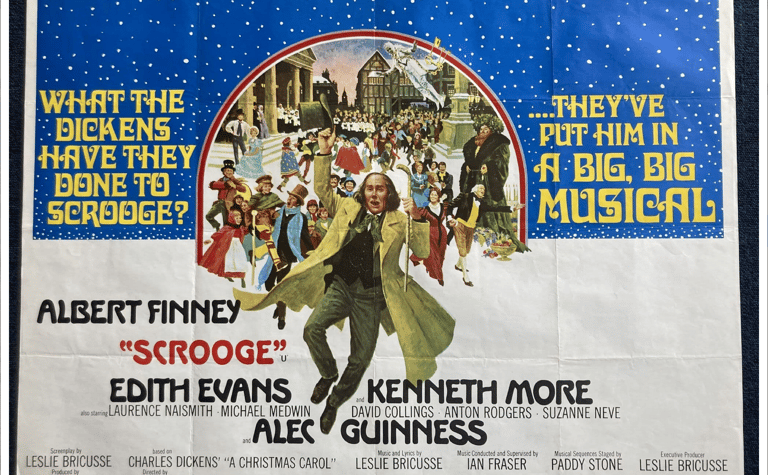
Scrooge (1970) presents Christmas as a moral laboratory as the ghosts drag Scrooge through Christmases Past in order to learn and grow. Christmas is a space for therapy rather than communal warmth.
And then Mame (1974) takes Christmas somewhere entirely new. “We Need a Little Christmas” arrives not because the calendar demands it, but because Mame herself does. Christmas is a survival mechanism—an emotional Band-Aid applied in a moment of financial collapse and personal fear. It is Christmas as invention, Christmas as personal agency, Christmas is a tool, an artificial tree made manifest: designed, assembled, deployed. A season you can manufacture on demand.
Sincerity and the Postmodern Turn: Christmas in the 1990s
If the 70s used Christmas to crack characters open, the early 1990s briefly tried to put them back together. The Muppet Christmas Carol (1992) depicts a Christmas of kindness and communal joy. In a decade tipping toward postmodern detachment, the Muppets insist on wholeheartedness.
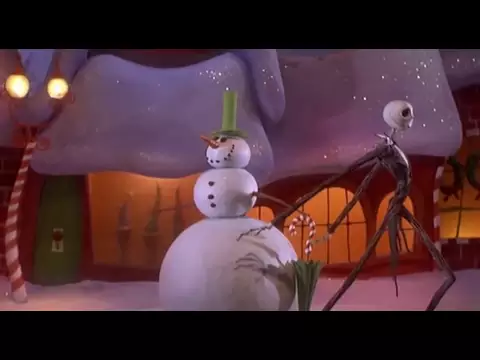
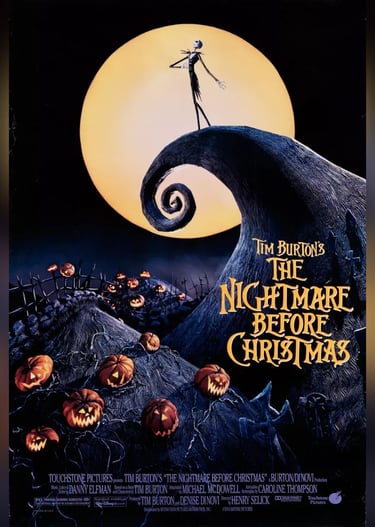
Christmas in The Nightmare Before Christmas (1993) is a postmodern intoxication. Jack Skellington encounters Christmas not as tradition but as aesthetic phenomenon—colours, textures, lights, spectacle. The film treats Christmas as a cultural language, it is Christmas as moodboard.
By the time we reach The Polar Express (2004), whose musical numbers function like theme-park attractions, Christmas has become a sensory experience more than a narrative one.
Christmas Without Christmas: Aesthetic Feeling in the 2010s
And then comes Frozen (2013): not a Christmas film but its winter iconography—snowflakes, candles—has made it a seasonal film by association. Here, Christmas isn’t a plotline but a feeling. Cold becomes repression; thaw becomes connection.
Why the Musical Can’t Resist Christmas
“White Christmas” dreams of a home that probably never existed. “Have Yourself a Merry Little Christmas” is a plea to hold on to something already slipping away. Scrooge’s journey is the unmasking of a man who cannot live with himself. Across all these shifts—nostalgia in the 40s, community-building in the 50s, psychological confrontation in the 70s, postmodern play in the 90s, aesthetic mood in the 2010s— Christmas is theatrical. It comes pre-fabricated with its own costumes, props, songs and emotions. It is a ready-made production number.
It’s not that musicals need Christmas. It’s that Christmas, in many ways, is already a musical. We perform Christmas. We perform familial unity and seasonal goodwill and because the Hollywood musical is built on performance, Christmas slides in with ease.
Watch
Before you watch: this is the official clip as released online and is still available at the time of posting.
“Have Yourself a Merry Little Christmas” – Meet Me in St. Louis (1944)
Judy Garland’s iconic performance from the snow-covered garden scene—one of Hollywood’s most moving Christmas musical moments, capturing the quiet emotional truth at the heart of the film.
“What’s This?” – The Nightmare Before Christmas (1993)
Jack Skellington’s wide-eyed discovery of Christmas Town, a burst of postmodern wonder set to Danny Elfman’s unforgettable song—Christmas reimagined as pure aesthetic exhilaration.